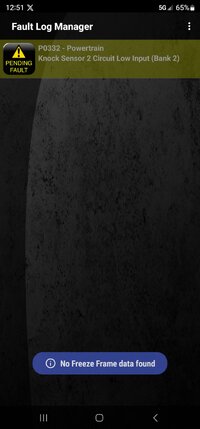
NEED HELP CEL with P0332 rear knock sensor - how to test wire?

If both sensors are the same part, you could try swapping the front and rear sensor connectors to be absolutely sure it's a problem with the wiring or PCM. With reversed connectors, P0327 should set instead, obviously.


I'm more interested in why none of the online FSMs detail how the knock sensor signal is interpreted. My guess is engine vibrations cause the piezoelectric sensor to generate a voltage and an ADC in the PCM interprets the peak voltage of a spike as the "power" of the vibration (worse knock = higher voltage), meanwhile the CPU keeps track of the spike frequency and P0332/P0327 set whenever the voltage spike goes out of range or when fewer spikes are occuring than expected.


Perhaps there's another GM vehicle that uses the same sensors but has more details on the specifics for what a normal sensor signal is supposed to look like?
 
  • Like
Reactions: Mooseman
lots of "detective work"... have you looked at any of the freeze frame for the code?
Ok, I installed new upstream and downstream o2 sensors, re-ran the logs.

I tried to do the freeze frame of the check engine code within Torque Pro app, but it wont show any info about it. see attached screenshots...

I have also attached the new logs from after installing the new o2 sensors. I don't really see anything wrong. or out of the ordinary.
No misfires recorded.
Long term fuel trim is staying from 0.75 to 7 % positive, varies with rpm and settles back to 0.75% to 3% after driving around, but it isn't crazy high or low to compensate for some air/fuel issue. A quick search says that from -10% to +10% are generally normal and don't indicate any problems.

So I'm back to need to do a top end cylinder cleaning with the berryman intake and valve cleaner but i'm going to do a combustion chamber type soak with it.
and maybe an issue with the computer itself.
 

Attachments

If both sensors are the same part, you could try swapping the front and rear sensor connectors to be absolutely sure it's a problem with the wiring or PCM. With reversed connectors, P0327 should set instead, obviously.
I'll see if the connectors will reach. I swapped the sensors themselves, and was going to look at swapping the pins in the PCM side connector to flip the wiring, but I could also do this and swap the connectors if they reach.
I'll check it out and report back.
 
I tried to do the freeze frame of the check engine code within Torque Pro app, but it wont show any info about it.
Not sure but I don't think a "pending fault" will cause a freeze frame snap shot since the fault hasn't actually occurred as the conditions for settings the code haven't been met.... my guess / read.

ADDED: thinking about your meter testing some more. How about this impedance test. Disconnect the connector from the back KS. Locate the low reference pin. This low reference is coming from within the PCM. I believe you measured the impedance on the pin to a "known good ground" and got an "open". That's good as that means there is no short to ground. However, it doesn't really tell you if the "low reference" is indeed "low" meaning it isn't some form of "non-zero impedance". So then how about testing from one low ref to another with the chance that perhaps in the PCM, various low ref's come from a common source. As a guess, I would try using the MAP sensor. It too has a low ref. Disconnect the connector therein, and do a resistance measurement from the pin in the map connector to the low ref in the KS connector. Do a second test with the same setup to the other KS (the good one)... which you then compare. Of course, IF the low ref isn't coming from a common circuit in the PCM, it won't help but it doesn't hurt to try. The alternative is "guessing" at finding a low ref at the pcm some where that is common.... but I hate playing with the PCM connectors and pins because you maybe opening up a "can of bad connections" thereafter. :-)
 
Last edited:
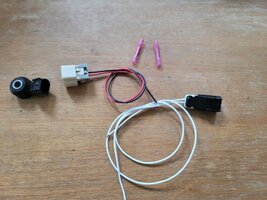
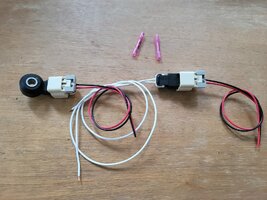
Ordered a couple connectors and made up a knock sensor extension cable. I am waiting on the 2nd connector to get delivered today to make the 2nd one. Then I'll swap the wiring to the knock sensors and see if anything changes.
 

Attachments

  • 20260616_174710 (Large).jpg
    20260616_174710 (Large).jpg
    84.3 KB · Views: 0
  • 20260616_174544 (Large).jpg
    20260616_174544 (Large).jpg
    317.8 KB · Views: 0
  • 20260616_174835 (Large).jpg
    20260616_174835 (Large).jpg
    345.8 KB · Views: 0
  • 20260617_094554 (Large).jpg
    20260617_094554 (Large).jpg
    339 KB · Views: 0
  • Like
Reactions: Mooseman
Not sure but I don't think a "pending fault" will cause a freeze frame snap shot since the fault hasn't actually occurred as the conditions for settings the code haven't been met.... my guess / read.
Yeah, I'm not sure why the Torque Pro shows it as just a pending fault but it is causing a check engine light and on my other obd2 reader, it shows to be both a fault and a pending fault code.

ADDED: thinking about your meter testing some more. How about this impedance test. Disconnect the connector from the back KS. Locate the low reference pin. This low reference is coming from within the PCM. I believe you measured the impedance on the pin to a "known good ground" and got an "open". That's good as that means there is no short to ground. However, it doesn't really tell you if the "low reference" is indeed "low" meaning it isn't some form of "non-zero impedance". So then how about testing from one low ref to another with the chance that perhaps in the PCM, various low ref's come from a common source. As a guess, I would try using the MAP sensor. It too has a low ref. Disconnect the connector therein, and do a resistance measurement from the pin in the map connector to the low ref in the KS connector. Do a second test with the same setup to the other KS (the good one)... which you then compare. Of course, IF the low ref isn't coming from a common circuit in the PCM, it won't help but it doesn't hurt to try. The alternative is "guessing" at finding a low ref at the pcm some where that is common.... but I hate playing with the PCM connectors and pins because you maybe opening up a "can of bad connections" thereafter. :-)
I will have to try this bias check. The guy did it on the video that Mooseman posted within an earlier comment to this post, but he was checking bias between the sensors. I'll have to look into this and try it next.
 
Ok, So I installed the extenders and swapped the connectors. so the connector that was on the front bank knock sensor 1 is now connected to the rear knock bank sensor 2 and the bank 2 is connected to bank 1.

I cleared the P0332 code and then drove it around. The code came back and it is the same code.
So this tells me it is not the knock sensor or the knock sensor circuit for the rear bank 2 knock sensor. IF the knock sensors were working properly and I had a knock in the rear bank, the new check engine light code should show the front bank 1 knock sensor, but it didn't, it still showed the rear bank 2 code p0332.

I also checked the alternator for interference, I put the meter in AC volt mode and put the probes on battery terminal connectors of the same color and was only getting 0.02 volts to 0.03 volts. So the alternator filter isn't bad and feeding interference into the system causing the knock sensor issue.

So I'm leaning towards a computer failure, but I want to check all my grounds one more time and make sure they are all clean and no broken wires or connectors.
 
Ok, So I installed the extenders and swapped the connectors. so the connector that was on the front bank knock sensor 1 is now connected to the rear knock bank sensor 2 and the bank 2 is connected to bank 1.

I cleared the P0332 code and then drove it around. The code came back and it is the same code.
So this tells me it is not the knock sensor or the knock sensor circuit for the rear bank 2 knock sensor. IF the knock sensors were working properly and I had a knock in the rear bank, the new check engine light code should show the front bank 1 knock sensor, but it didn't, it still showed the rear bank 2 code p0332.

I also checked the alternator for interference, I put the meter in AC volt mode and put the probes on battery terminal connectors of the same color and was only getting 0.02 volts to 0.03 volts. So the alternator filter isn't bad and feeding interference into the system causing the knock sensor issue.

So I'm leaning towards a computer failure, but I want to check all my grounds one more time and make sure they are all clean and no broken wires or connectors.
do the impedance that I suggested earlier using the combinations of "low refs". The results of your "switch-a-roo" testing is that it doesn't rule out an issue at the connectors to the pcm as opposed to the PCM itself. Depending on the results, you can then focus on a "faulty pcm"... maybe.
 
Do you have a U-pull yard nearby? See if they have a 2007 TB or Voy and go grab one. Shouldn't be too expensive. Hopefully it would have the same gearing. You can throw it in and do the security relearn. It might need a CASE relearn if a cam/crank correlation code comes up but that won't prevent it from running. In that case, you would need to find a shop that can do it or a stealership.
 
ADDED: thinking about your meter testing some more. How about this impedance test. Disconnect the connector from the back KS. Locate the low reference pin. This low reference is coming from within the PCM. I believe you measured the impedance on the pin to a "known good ground" and got an "open". That's good as that means there is no short to ground. However, it doesn't really tell you if the "low reference" is indeed "low" meaning it isn't some form of "non-zero impedance". So then how about testing from one low ref to another with the chance that perhaps in the PCM, various low ref's come from a common source. As a guess, I would try using the MAP sensor. It too has a low ref. Disconnect the connector therein, and do a resistance measurement from the pin in the map connector to the low ref in the KS connector. Do a second test with the same setup to the other KS (the good one)... which you then compare. Of course, IF the low ref isn't coming from a common circuit in the PCM, it won't help but it doesn't hurt to try. The alternative is "guessing" at finding a low ref at the pcm some where that is common.... but I hate playing with the PCM connectors and pins because you maybe opening up a "can of bad connections" thereafter. :-)
ok, so I tried to test this, but not sure exactly what the "bias" test is doing so I'm not sure I'm doing this right. Then new info at the bottom of this post.
Turned key on but engine off KOEO
Unplugged MAP sensor, it has 3 wires.
Gray - 5v wire - tested this by putting meter on DC volts, grounding black probe to battery terminal and probing with red probe on the connector pin, meter reads 5.03 volts.
Green - Signal wire - didn't touch this wire pin.
Orange stripe - tested in DC volts, red probe on positive battery terminal and black probe on orange wire pin, reads 12.25v
I then tested the voltage across from the orange stripe wire pin to the gray wire and also got 5 volts.

So then doing the same on the knock sensor connectors, I put the KOEO, put meter in volts DC, red probe on one pin in the connector and black probe to battery ground terminal, I get 4.05 volts, BUT then, I move the red probe to the second pin on the connector trying to make sure I have the reference pin and the power pin identified, and I'm still getting 4.05 volts! I did this with both knock sensor connectors and its the same for all 4 pins of the two connectors. 4.05 volts. The ole AI chatbot tells me maybe this is why its throwing a low signal b/c it should be sending 2.5v up one wire and back to the computer thru the reference wire but since its 4.05v on both legs, its reading it as 0.00 volts and throwing the low signal code.
The AI then has me unplug the PCM connector and test again to make sure the voltage isn't coming from some other source with a melted wire or cross voltage up these wires.
So I turned off the key, disconnect batter, unplugged the middle PCM connector that corresponds to the knock sensor, connect battery back and then tested this again, and now I get zero voltage on the pins of the knock sensors.

So I'm not sure about the reference test on one of the pins if they are both reading 4.05v.
I didn't notice both pins giving me 4.05v before, I thought it was only one of the pins on each knock sensor connector.

 

Forum Statistics

Threads
24,308
Posts
649,106
Members
20,834
Latest member
Shakhty

Members Online