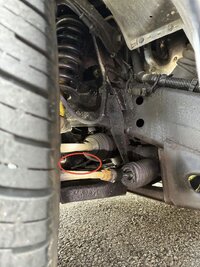
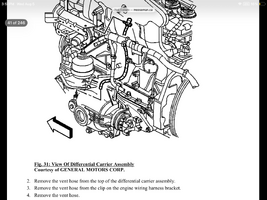
Its not a cap, its a one way air breather. Its the only way I know how to word it.
From Google AI
A
differential breather is a vent valve located on top of an axle housing that allows internal air pressure to equalize as the gear oil heats up and expands during vehicle operation. Without this pressure relief, the expanding hot air will force its way out by blowing past the pinion and axle seals, leading to costly fluid leaks. [
1,
2,
3,
4]
How it Works & Common Failure Modes
When your vehicle is moving, friction among the gears and bearings heats up the differential fluid. The air inside the hollow axle tube expands and escapes through the breather. Conversely, when the vehicle stops and the axle cools down, the air contracts and creates a vacuum, drawing fresh air back into the housing. [
1,
2,
3]
However, stock breathers are prone to two critical failure modes:
- Debris Blockages: Factory breathers typically use a simple spring-loaded metal cap. Over time, exposure to dirt, road salt, mud, or rust can seize the valve completely shut or open. If it seizes shut, built-up pressure blows out your axle seals. [1, 2, 3, 4, 5]
- The "Water Straw" Effect: If you submerge a hot axle in a puddle, river crossing, or boat ramp, the cold water causes the differential housing to rapidly cool down. This sudden temperature drop creates a severe internal vacuum. Because the stock vent sits low directly on the axle, it gets submerged, and the vacuum sucks water and mud straight into the housing. Water mixes with gear oil to form a milky sludge, destroying the bearings and gears if not immediately flushed. [1, 2, 3, 4, 5]
The Solution: Extended Breather Kits
To eliminate the risk of water contamination, many off-roaders and truck owners replace the stock valve with an
extended differential breather kit. [
1,
2]
This modification deletes the low-mounted factory valve and replaces it with a threaded union barb. A length of fuel or air line hose is attached and routed up into a high, dry, protected location—such as behind the vehicle's taillight assembly, inside the fuel filler door shield, or high up in the engine bay. The end of the line is capped with a small dedicated air filter to keep out dust. [
1,
2,
3,
4,
5]
This ensures that even if your axles are completely underwater, the differential only draws in clean, dry air when it cools down. Many comprehensive aftermarket setups, like the
ARB Differential Breather Kit (~$90), feature central billet aluminum manifolds capable of venting up to four separate drivetrain assemblies (front diff, rear diff, transmission, and transfer case) into a single high-mounted location. For budget setups, basic replacement vents or lines like those from
Dorman or
Summit Racing can be used to construct a custom setup for under $15–$35. [
1,
2,
3,
4]